case-study
How a Global Storage Leader Turned Trade Show Demos into Stronger Buyer Interest
How a Leading Data Storage Provider Transformed Difficult Technical Discussions into Buyer Engagement and Understanding
At trade shows and industry events, the team faced a relentless version of the same challenge: “Who are you, and what do you make?” A compact physical device, however technically remarkable, communicates little on its own. It needs context. It needs a story. Most importantly, it needs to help buyers understand not just what it is, but where it fits, why it matters, and what it enables for their specific business and infrastructure challenges.
The tools available weren’t accomplishing that goal.
Static displays showcased products but not business value. Video loops competed for attention with every other booth on the show floor. Valuable information was always buried in the next slide, the next presentation, or the next conversation. When buyers did engage, the quality and depth of the experience depended heavily on which employee was staffing the booth that day.
The organization also faced a practical challenge: physically transporting enterprise hardware to events required shipping tens of thousands of dollars in inventory with no guarantee of meaningful engagement or return.
For companies operating at the intersection of AI infrastructure, cloud storage, semiconductors, and enterprise data centers, the gap between technical innovation and buyer understanding can quickly become a strategic liability.
The Solution: A Guided Buyer Experience
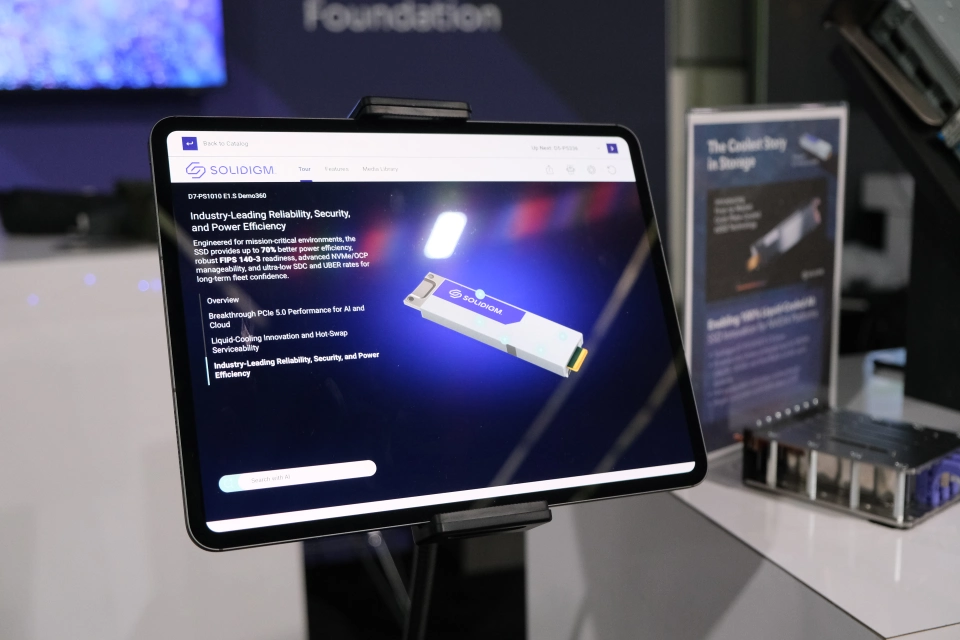
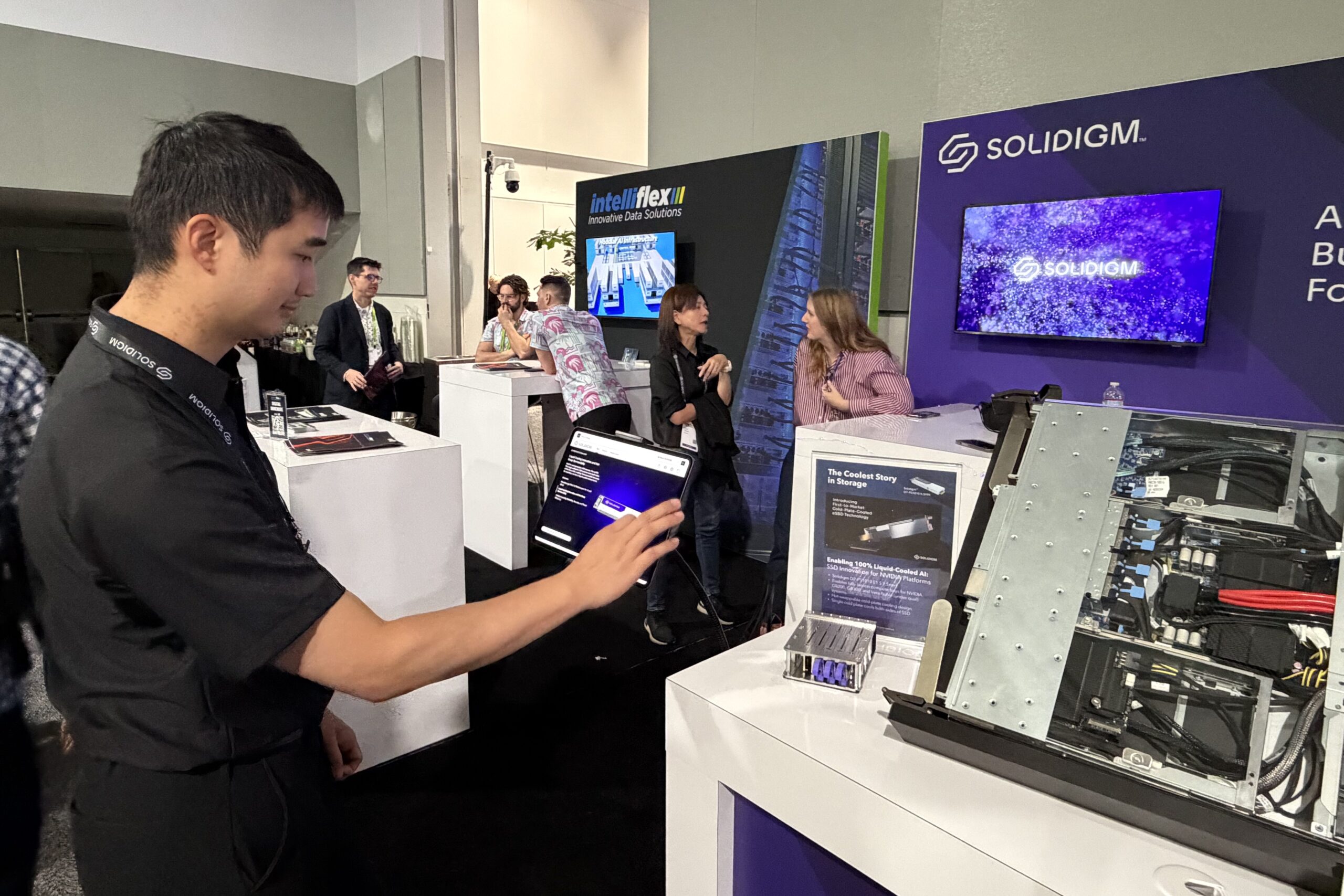
To address these challenges, the company implemented Kaon’s AI-guided Buyer Engagement Platform, a multi-channel content experience platform designed to support complex buying committees across digital and in-person environments. Deployed on trade show touchscreens, tablets, and laptops, the solution enabled sales teams to replace static product presentations with personalized, non-linear buyer experiences tailored to each stakeholder’s interests and priorities.
The platform was built around a simple insight:
Different stakeholders need different stories.
A procurement leader evaluating cost and risk requires different information than an infrastructure architect evaluating compatibility and performance. A business executive assessing strategic impact requires a different context than an operations team evaluating deployment requirements.
The platform enabled teams to start conversations from the buyer’s perspective and quickly navigate to the information most relevant to each stakeholder’s priorities.
Offline functionality proved particularly valuable. Without dependence on event Wi-Fi or internet connectivity, teams could deliver consistent experiences from virtually any device, anywhere. Guided content pathways also reduced the reliance on deep product expertise, allowing newer team members to engage confidently and effectively.
The organization further extended the experience to channel and strategic partners, enabling partners to deliver consistent messaging while maintaining governance and control over the content experience.
The Results: Better Conversations, Better Access, Better Outcomes
The results were immediate, and the company realized benefits beyond the original objectives.
- Buyer engagement that converts. Interactive experiences changed the dynamic of event engagement. Where static displays and video loops were easy to ignore, interactive experiences encouraged exploration and participation. Buyers stopped, engaged, and often returned with colleagues. More importantly, conversations extended beyond the event itself, generating higher-quality follow-up discussions and stronger buyer interest.
- Access to senior decision makers. In highly competitive technology markets, gaining access to executive stakeholders is often one of the greatest challenges. By helping teams communicate business value more clearly (and tailor conversations to stakeholder priorities), the organization found itself engaging executive audiences that had previously been difficult to reach. The ability to connect technical capabilities to business outcomes elevated conversations from product discussions to strategic discussions.
- A self-directed buying experience that works without a sales rep in the room. One of the most valuable outcomes emerged when buyers engaged independently. Prospects could explore information on their own terms, investigate questions relevant to their role, and build understanding before speaking with a sales representative. As a result, when conversations did occur, they were more informed, more productive, and more likely to focus on meaningful business challenges.
- Eliminating the hardware logistics burden. By deploying rich digital experiences across tablets and touchscreens, the organization significantly reduced the need to transport expensive hardware to events. This reduced logistics complexity, lowered costs, minimized risk, and allowed revenue-generating inventory to remain where it provided the greatest business value.
Conclusion
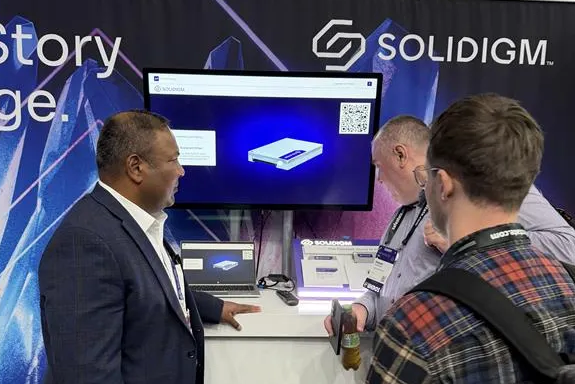
For organizations selling complex products, the challenge is rarely a lack of information—it’s a lack of understanding. This experience illustrates what’s possible when buyer engagement moves beyond static content and becomes an interactive, AI-guided journey that helps every stakeholder explore, understand, and gain confidence on their own terms. The product didn’t change. The buyer’s ability to understand its value did.